China’s microblog has become the new frontier of China’s Christian movement. The Twitter-like service run by Sina.com, also known as “wei bo” – the Chinese word for microblog – now claims more than 120 million users and are expected to reach 200 million at the end of the year. And it is only natural that Christianity is thriving on the fastest-growing and the most powerful (and therefore most feared by the government) media platform ever seen in history.
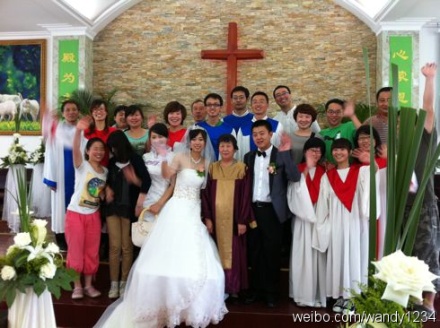
There are a number of high-profile Christian celebrities who use microblog to publicize their faith. Mr. Pan Shiyi, a real estate billionaire, frequently shares prayers with his six million plus followers on Sundays. A Taiwanese actor posted pictures of his widely-reported wedding on weibo, where he has more than four million followers. Both he and his wife are Christians.
If you think that this means more than ten million people have just heard the Good News, you will probably be disappointed. Comments of these high-spirited posts are mixed. Some people, including a few nationalists, are against any religious statements. Others are somewhat inherently resistant toward the effort of Christian friends to proselytize.
But if you look around, Christianity – at least those types tolerated by the government – is alive and well on China’s microblogs. Below are just a few select postings from the vast information ocean inside China’s Great Firewall.
This post is a special gift to a friend who recently asked me whether Chinese people are allowed to go to church. Here it goes.
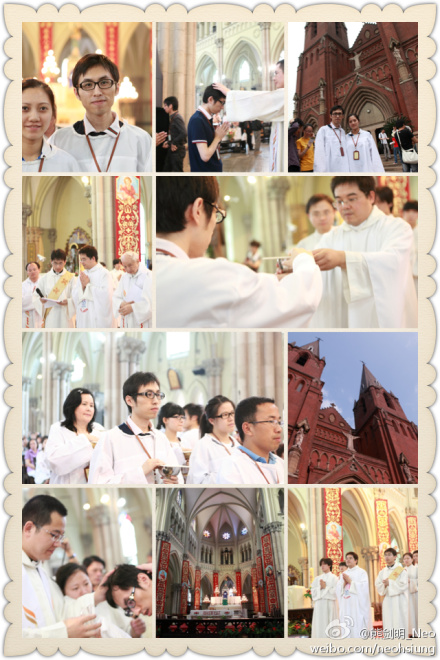
1. Neo: It’s a day to be born again. After a year of pondering, half year of study and many a signs from the Lord, my wife and I have been baptized at Xu Hui Church today. We announced that from now on, we are officially and eternally a Christian. In the name of the Father and of the Son and of the Holy Spirit. Amen.
@熊剑明_Neo : 今天是个重生的日子。经过一年多思考,半年多的慕道,受主的多次启示。今天和太太一起在徐汇大堂领了洗,接受了入门圣事。宣告从此正式的,永久的成为一名 基督徒。In the name of the Father and of the Son and of the Holy Spirit.Amen.
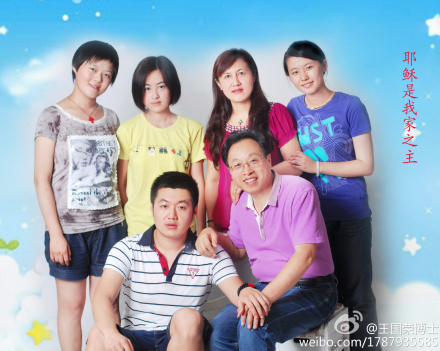
2. Doctor Wang: This is our happy family. I am in purple T-shirt. The strong man at the front is my loving son. Behind me is my wife who have accompanied me for 25 years. The other three girls are my daughters. We are believers of the Lord and a typical Chinese christian family.
@王国荣博士:这是我们幸福的一家人。穿紫色T恤是我,最前面的壮小伙是我的爱子,我后面的是陪伴我二十五年的太太,其余是我的三个女儿。我们一家人信主,是典型的中国基督教家庭。
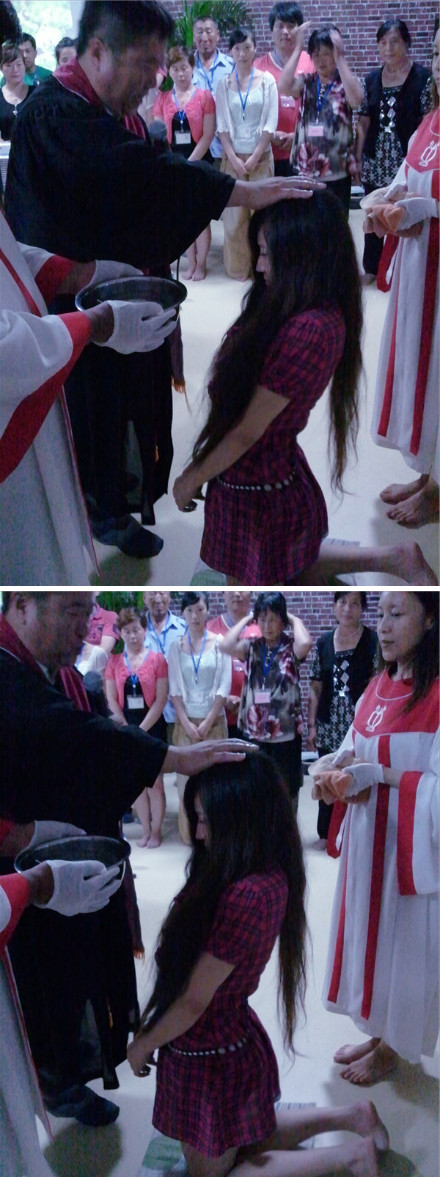
Nora: I haven’t been able to attend church gatherings for some time because of my job. Luckily, after I came to Shanghai, a friend recommended an internal Christian gathering hosted by a cosmetics company. The weather is comfortable in Shanghai and I feel great – Thank God! I am grateful to life. Wish all brothers and sisters happiness and safety. Leaving again right now!
@朱紫汶NORA:由于工作性质特殊原因已有好些日子没能参加教堂聚会了,很幸运的是来到上海在@演员王琳 姐的推荐下参加今日上海由@CMM郑明明化妆品公司 组织的业内人士基督教私人聚会!上海气候很舒适,心情很舒畅~感谢上帝!感恩生活!祝福所有良善的兄弟姊姊快乐平安每一天!马上出发!

Ms. Xing: I was baptized last year today!
XX: Attending the wedding of my friend who’s a Christian. Very solemn and pure…
XX: I am at Christian Church in Guangzhou. <This posting uses localization app showing a map)
(我在基督教东山堂广东省 广州市 越秀区 寺贝通津 )
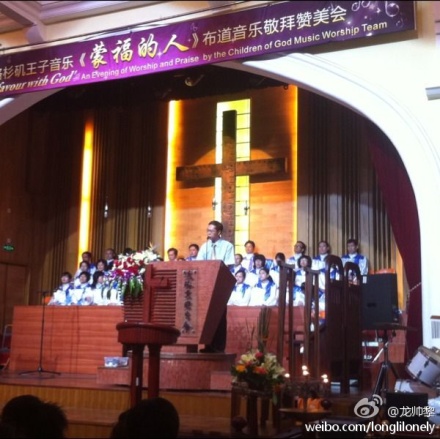
Attending service on Sunday: Shanghai Jiang Wan Christian Church. (上海虹口区新建的江湾基督教堂)
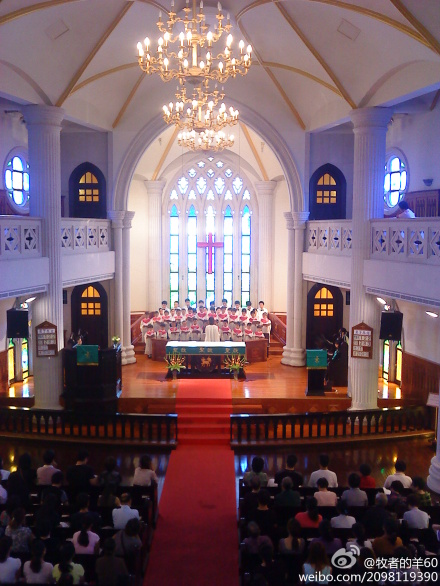
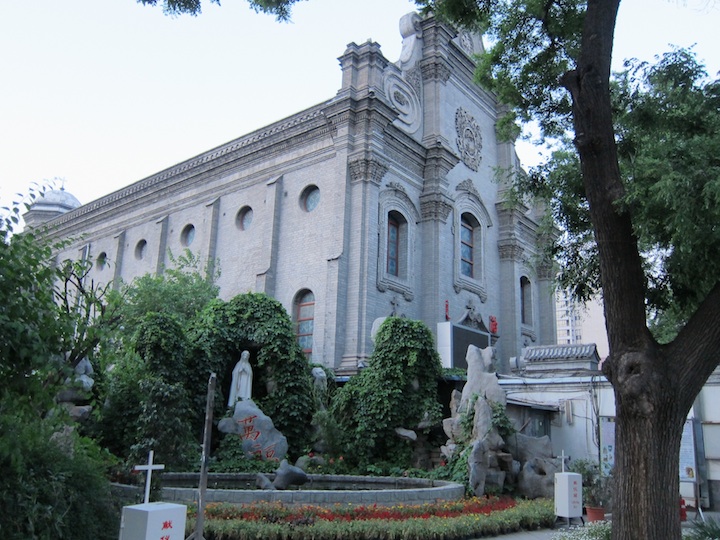
Service at Gao Wa Si Church, Beijing
XXXX: I met a Christian this afternoon who kindly gave me two books. The books talk about how to make choices and decisions in different circumstances. Maybe even a stranger can recognize my emotions now? Thank you very much!
@咪嘈水水:下午偶遇一基督教徒,很热心地送我两本书。说书里有写遇到各种情况如何取舍,有选择、有放弃。是否一陌生人也能看出我现在的心情了?非常感谢你!
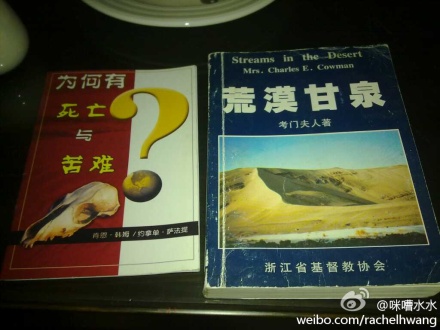
Someone commented on this picture that the Cross can be used to teach soldiers how to stand with a perfectly straight back, similarly, it can be used to cure all ills of the heart.
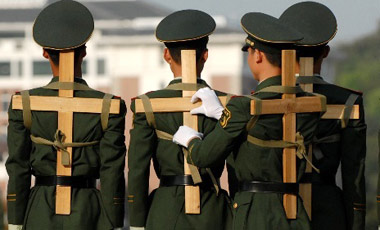
One type of popular posts tend to praise Christianity as the spiritual foundation of Western civilizations and democracy. The one below is made by a professor at Beijing University of Technology. “…Mr. Yang, the most venerable Chinese intellect, explored the secret of China’s prosperity in his early research. He found market economy. Later, he discovered that market economy is based upon constitutional government. If political powers are not reined, then private property rights cannot be protected. Finally, he realized Christianity is the foundation of constitutional government. All successful constitutional governments are Christian countries or those who have been taught by those Christian countries…”
@赵晓: 杨小凯,是中国知识分中走得最远的。早年他探讨中国富强的奥秘,找到了市场经济。后来他发现,市场经济需要宪政基础。政权不归位,则产权不到位。没有产权 基础何来市场经济?再后来他发现基督教文明是宪政基础,世界上宪政成功的国家或者是基督教国家,或者是被基督教国家修理过的国家(如日本)…… 北京科技大学管理学院教授
Finally, an interesting post from the real experience shared by a real Chinese netizen. “I haven’t been back to my home village for many years. A while back, I returned for a school reunion. The changes in the countryside are not too drastic. But one change shocked me: there are churches and crosses everywhere! I heard that some villages have all their residents turned to Christians. They do not farm the land but are busy with church gatherings. They call each other brothers and sisters, instead of father or son! Even weirder, though they are all Christians, they belong to different sects and often have fights! It certainly doesn’t sound right!
@稳普高清摄像机: 很多年不回老家,前些日子同学聚会回去一次,发现原来的农村变化不太大,但是一个变化让我惊诧,到处都是教堂、十字架!听说有的村全村人都信教,每天几乎 不做农活,只是忙着教会的事情,在教会好像都称兄弟姐妹、不分大小年长辈分!更奇怪的是,虽然都信教好像分了很多派别,常常发生冲突!变味啦!
Recent Comments